Our History
Discover the remarkable journey of The Abbey, born from the profound vision of Bishop Steven Verney and Rev. Fred J. Blum, and its lasting impact as a sanctuary for spiritual exploration and community.
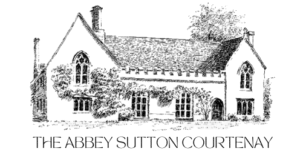
The Abbey at Sutton Courtenay stands as a testament to the vision of its founders, Bishop Steven Verney and Rev. Fred J. Blum.
For over 40 years, it has been a sanctuary for spiritual exploration, personal growth, and community connection, open to people of all faiths and none. Rooted in the founders’ profound experiences and unwavering commitment to peace and understanding, The Abbey continues to be a place ‘to stop and think (be)’.
Founders

Rev. Fred J. Blum
(1914-1990)
A German Jewish refugee from the Holocaust, Fred J. Blum became a psychotherapist and Anglican priest, driven by a deep desire to understand human consciousness and promote peace. His journey from adversity to spiritual enlightenment shaped his vision for The Abbey.
Right Reverend Stephen Verney
(1919-2009)
An innovative Anglican Bishop and theologian, Stephen Verney shared Fred’s vision of creating a space for spiritual development and community transformation. His support was instrumental in establishing The Abbey as a centre for workshops and public events.

Fred Blum’s Journey
Early life
- Born in Mannheim, Germany, to a liberal Jewish family.
- Fled Nazi Germany in 1939, emigrating to the USA.
- Experienced the profound loss of family members in the Holocaust, including his mother at Auschwitz.
Spiritual journey
- Joined the Quaker Society of Friends while maintaining his Jewish heritage.
- Experienced a transformative spiritual awakening on visiting Auschwitz, realising “that only Jesus the Jew could cope with that terrible darkness, both with the evil of the gas chamber and with the guilt in Fred’s own heart of having survived when others died”*.
* As quoted by Verney.
Academic path
- Taught economics and social sciences at universities in the USA.
- Served as an advisor to the US Senate, including Senator John F. Kennedy.
- Conducted extensive sociological and psychosocial research.
- Moved to the UK in 1958 and trained as an analytical psychologist.
New Era
- Founded the charitable organisation “The New Era Centre” in 1967, promoting spiritual aspects of social action.
- Envisioned a community where people of all faiths could work together for truth and justice.
- Turned his home into a place for seminars and workshops.
The Abbey
- In 1979, with Stephen Verney’s support, acquired The Abbey as a physical base for the New Era Centre.
- Worked tirelessly to restore The Abbey, creating a community focussed on cooperation and healing.
- Ordained as an Anglican priest in 1986.
- Passed away in 1990, leaving a legacy of spiritual insight and community building.
More about Fred Blum
Fred Johannes Blum was born 1914 in Mannheim, Germany to a liberal, professional Jewish family. In the 1930s he went to study social sciences at the University of Geneva, Switzerland. By 1938, as a non-Aryan suffering much adversity, he could see no future in Hitler’s Third Reich and in 1939 he left his family behind, emigrating to the USA to undertake a Doctorate at the University of California and later becoming an American citizen. En route to the US he passed through London on the day that war was declared.
During the early years of the war the Quaker Society of Friends were supporting ‘enemy-alien’ refugees like himself and Fred, drawn to their quiet ways of worship, became a member of the Quakers, whilst maintaining his Jewish heritage.
In the 1940s many members of Fred’s family, including both parents, died in the Holocaust (his mother in the Auschwitz concentration camp). After the war Fred visited Auschwitz and when standing at the place where his mother had died,
“he knew that only Jesus the Jew could cope with that terrible darkness, both with the evil of the gas chamber and with the guilt in Fred’s own heart of having survived when others died”.
S Verney
It was this enlightenment that shaped Fred’s life’s work. He sought to understand non-violence; he envisioned better ways of living together for humanity; he studied and advised on work structures and conditions. He was always seeking ways to democracy, freedom, peace, growth, personal and community transformation.
He admired and was inspired by visionaries like Schweitzer, Saint Francis and (especially) Gandhi who all advocated and practised non-violence.
During the next twenty years in America, Fred’s personal and professional life were shaped by three questions:
- What does it mean to be human?
- How does consciousness develop in individuals and cultures?
- How do spirituality and ethics relate to everyday living? (A Blum)
Fred taught economics at Howard University in Washington DC and was a professor of social sciences in Michigan and Minnesota. The US Senate appointed Fred advisor to the Labor and Welfare Committee and he worked as a consultant for the young Senator John F Kennedy.
Professor Blum lead various sociological and psychosocial research projects.
1956 Fred was Associate Professor at the University of Minnesota (where he met his wife Arna).
1958 Fred and his family travelled on the Queen Mary to the UK.
1958 – 1963 Fred had sabbatical and teaching exchange arrangements in Europe.
1963 Fred resigned his US academic post and committed himself (and his family) to a future based in England. He developed his interest in Gandhi, with personal and professional associations with Gandhians in England and India (a country he visited many times) leading to the “Gandhi Interview Project” in the 1970s and early 80s.*
1958 – 1962 Fred trained as an analytical psychologist in London and began working with individual clients.
1967 Fred founded the charitable organisation “The New Era Centre”, developing his thinking and writing on spiritual aspects of social witness and action. He believed that “people of spiritual commitment from all faiths and none, must together be witness to ways of establishing a new era of truth and justice.” (New Era proposal 1967)
His home in Hertfordshire became a place for seminars and workshops that brought together supporters of his vision for healing communities.
In 1969 he met Stephen Verney at a conference in Coventry where Stephen was doing reconciliation work. They became friends (“like brothers”) and Stephen became a Trustee and significant supporter and contributor to the creation and work of The New Era Centre at The Abbey which began in 1979.
1979 onwards:
Fred’s vision of finding a physical base for the New Era Centre became a reality. The Abbey at Sutton Courtenay was bought and so began the hard work of raising funds and finding labour (often volunteers) for transforming a dilapidated, uninhabitable house into a place of healing. His dream was to have supporters and companions to create a community that lived as “cooperators with nature and each other”.
Fred continued his work with analytical clients, based at The Abbey. Some, such as members of L’Arche communities would stay at The Abbey whilst receiving analysis. Fred’s experience at Auschwitz had inspired in him not only a “professional empathy” but also compassion for all he encountered. He enabled people to be set free – even as he, himself was unable to be free.
1983 After a short period of living in The Abbey, Fred and Arna moved into 1 Abbey Cottages next to The Abbey.
1986 Fred decided to be baptised into the Anglican Church and a few months later he was ordained as priest.
1989 December, Fred had a severe stroke which deprived him of speech. He could not imagine a life without this expression and chose to eat nothing, dying in the beginning of January 1990.
All his life Fred was a traveller; both in his mind and geographically. He researched, described, listened, questioned, meditated. He loved all the arts, even studying with Oska Kokoschka in 1958.
Fred “had a special eye for colour, form and beauty.”
A Blum
Fred loved words – he was a prolific writer (publishing several books) and he built up a vast library of books (still housed at The Abbey) on all subjects and especially writings by Gandhi. He was a great believer in education. In the 1967 proposal for the New Era Centre he wrote:
…”we must develop a unified framework within which science, religion and the arts can be interrelated while each makes its own contribution to the quest for Truth.”
F J Blum
Fred was indefatigable in all he did; he has been described as “courageously stubborn” (Verney) in his belief and determination to bring The Abbey back to life – in applying for grants and finding people with the skills to build, administrate and steward the house and community that were created.
His legacy is immense.
Stephen Verney’s Journey
Pacifist Principles
Lorem ipsum dolor sit amet, consectetur adipiscing elit.
Maecenas id eros elementum, porttitor ante a, dignissim augue. Vestibulum urna tellus, fringilla in tellus quis, rutrum lacinia ligula.
Morbi sagittis dolor nec dolor pulvinar ullamcorper. Phasellus ac felis nec risus elementum scelerisque vitae et lorem.
Meeting Fred
Lorem ipsum dolor sit amet, consectetur adipiscing elit.
Maecenas id eros elementum, porttitor ante a, dignissim augue. Vestibulum urna tellus, fringilla in tellus quis, rutrum lacinia ligula.
Morbi sagittis dolor nec dolor pulvinar ullamcorper. Phasellus ac felis nec risus elementum scelerisque vitae et lorem.
Verney’s legacy
Vestibulum urna tellus, fringilla in tellus quis, rutrum lacinia ligula.
Morbi sagittis dolor nec dolor pulvinar ullamcorper.
Phasellus ac felis nec risus elementum scelerisque vitae et lorem.
More about Stephen Verney
Proin et sodales orci. Nunc lacinia, lacus eget faucibus blandit, metus sem tincidunt leo, sed faucibus orci est sed ex. Vivamus nec felis posuere, tincidunt erat a, vulputate eros. Fusce vel enim laoreet, viverra massa ut, feugiat purus. Praesent egestas orci ut malesuada dapibus. In eu sagittis sapien. Integer hendrerit scelerisque diam sed volutpat. Fusce tempus viverra nulla ac dignissim.
Nullam non enim a ligula varius ultricies. Etiam euismod sit amet mi ut lacinia. Nullam felis lacus, mollis vitae porta in, sollicitudin vel enim. Duis sed ligula non magna pellentesque suscipit. Mauris eros velit, lacinia non velit id, pulvinar mattis nunc. Vivamus fermentum ullamcorper convallis. Quisque pharetra ex lacus, sed imperdiet tellus mollis vestibulum. Vivamus tempus cursus vulputate. Maecenas id lectus scelerisque, euismod nibh a, pharetra tellus.
Fusce accumsan velit ex, a venenatis augue fermentum eu. Sed fringilla sapien sed augue ultrices, quis pharetra enim imperdiet. Sed accumsan, elit eu elementum vehicula, risus nibh rutrum dolor, eget imperdiet nisi purus et quam. Nullam at sapien quam. Nam lacinia ornare condimentum. Maecenas tristique dapibus lacinia.
The Abbey: Then and Now
1066
The land of the Abbey in Sutton Courtenay is granted by William the Conqueror to Benedictine monks from Abingdon Abbey.
1284
Lord Hugh de Courtenay of Sutton Manor contests the land with the Abbey monks. Following a ruling in his favour, the presiding judge is appointed to live at the Abbey building, hinting at potential foul play.
1495
The Abbey property is acquired by the College of St. George, a community of priests set up by King Edward III, and remains in their possession until 1867. As property held by the King’s Men, the Abbey manages to escape the 1536 Dissolution of the Monasteries.
1902
The Abbey serves as home of Colonel HNB Good, a veteran of the Second Anglo-Boer War, until 1929.
1952
The Abbey in Sutton Courtenay is first listed on the National Heritage List for England.
1958
David Astor, editor of The Observer, purchases the Abbey and leases it to the Ockenden Venture (present-day Ockenden International).
1967
Fred Blum founds The New Era Centre.
1969
Fred Blum meets Stephen Verney, who becomes a key supporter and contributor to The New Era Centre and The Abbey project.
1973
His Holiness the Dalai Lama visits The Abbey to speak with a large gathering of Tibetan refugees.
1980
The Abbey is purchased as the physical base for The New Era Centre, marking the start of ongoing efforts to raise funds, find labour, and transform The Abbey into a centre for healing.
1983
Fred and Arna Blum move into 1 Abbey Cottages, located next to The Abbey.
1986
Fred Blum is baptised into the Anglican Church and ordained as a priest, further connecting his spiritual work with The Abbey.
1990
Fred Blum passes away in early January, following a severe stroke.
1991
The New Era Centre is renamed “The Abbey Sutton Courtenay”.
1066
The land of the Abbey in Sutton Courtenay is granted by William the Conqueror to Benedictine monks from Abingdon Abbey.
1284
Lord Hugh de Courtenay of Sutton Manor contests the land with the Abbey monks. Following a ruling in his favour, the presiding judge is appointed to live at the Abbey building, hinting at potential foul play.
1495
The Abbey property is acquired by the College of St. George, a community of priests set up by King Edward III, and remains in their possession until 1867. As property held by the King’s Men, the Abbey manages to escape the 1536 Dissolution of the Monasteries.
1902
The Abbey serves as home of Colonel HNB Good, a veteran of the Second Anglo-Boer War, until 1929.
1952
The Abbey in Sutton Courtenay is first listed on the National Heritage List for England.
1958
David Astor, editor of The Observer, purchases the Abbey and leases it to the Ockenden Venture (present-day Ockenden International).
1967
Fred Blum founds The New Era Centre.
1969
Fred Blum meets Stephen Verney, who becomes a key supporter and contributor to The New Era Centre and The Abbey project.
1973
His Holiness the Dalai Lama visits The Abbey to speak with a large gathering of Tibetan refugees.
1980
The Abbey at Sutton Courtenay is purchased as the physical base for The New Era Centre, marking the start of ongoing efforts to raise funds, find labour, and transform The Abbey into a centre for healing.
1983
Fred and Arna Blum move into 1 Abbey Cottages, located next to The Abbey.
1986
Fred Blum is baptised into the Anglican Church and ordained as a priest, further connecting his spiritual work with The Abbey.
1990
Fred Blum passes away in early January, following a severe stroke.
1991
The New Era Centre is renamed “The Abbey Sutton Courtenay”.